
We aim to make Northamptonshire safer and responding to emergency calls and ensuring the right staff with the right skills and the right tools gets to the emergency quickly and safely is at the heart of our response.
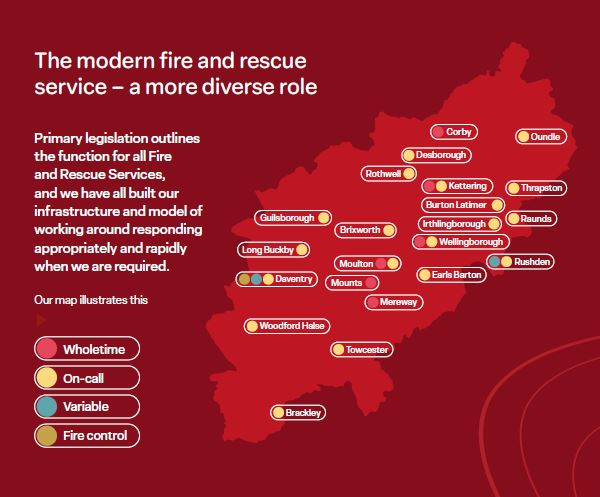
We have 22 fire stations in the county and provide a 24 hour a day service 365 days a year.
Our Community Risk Management Plan (CRMP) sets out how we deliver and are improving our services.
During 2025, we consulted with the public on a new way to measure our immediate response to incidents – we call this our Standards of Response (SOR). You can read more about the consultation here
We have not changed how we respond or when, simply the way we measure it.
We amended this measure to be more transparent about the service the public is receiving
- to show that the fastest response is for those emergencies that pose the greatest risk to life, property and the environment, and
- to more clearly show that whilst rare, the first resource on scene might not be a fire engine.
Responding quickly is one of the ways in which we reduce the risk of fire and other incidents in the community. This is especially important for certain types of incident – it can save lives, reduce the spread of fire or minimise the impact of an incident.
The modern fire and rescue service is about much more than responding to fires, we balance our resources to deliver on our mission – Preventing, protecting and responding to keep communities safe
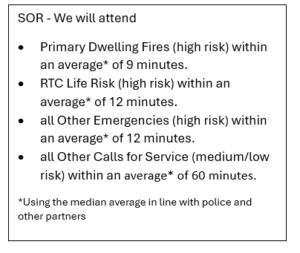
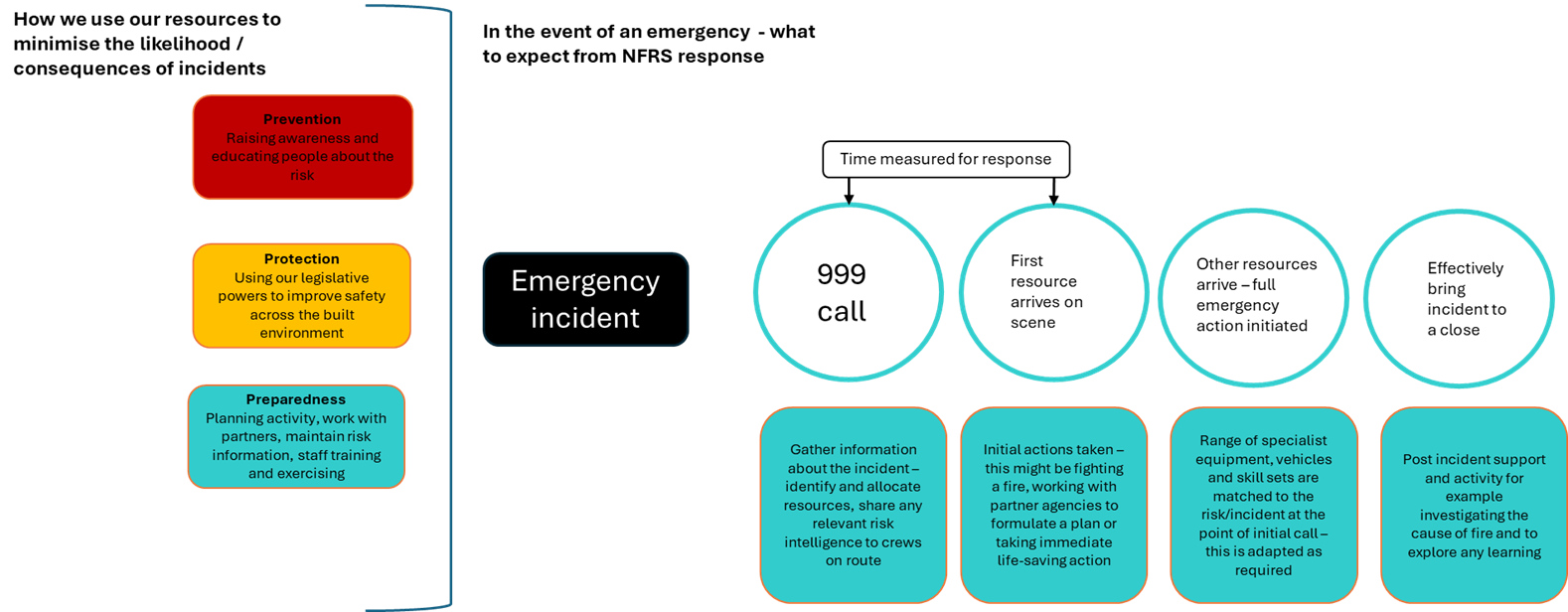
We have not changed how we respond or when, simply the way we measure it. Our newly adopted standards of response will provide us with a more accurate and reliable picture of our performance and the service that we offer. We started reporting on our new Standards of Response (SOR) in September, this can be viewed here.
In line with statutory responsibilities under the:
- Fire and Rescue Services Act 2004
- Civil Contingencies Act 2004
- Fire and Rescue Services (Emergencies) Order 2007
- Fire and Rescue Services National Framework
We are committed to providing a range of response capabilities to ensure we are capable of dealing with the full range of emergencies that reasonably could be expected for us to attend.
These emergencies may take place within the county of Northamptonshire or outside it and may be National or Sub-National in nature, i.e. wide area flooding.
This Response Strategy outlines how the service will respond immediately and effectively to emergency incidents.
It sets out how we will deliver and prioritise response activities and how we will allocate resources to ensure we can deliver against our strategic outcome to “Reduce deaths, injuries and damage caused by fire and other events”.
The Fire and Emergency Support Service (FESS) is designed to meet the needs of people who have suffered damage to their home following a fire, flood or similar incident.
This free service is delivered by specially trained volunteers, who work in co-operation with us. They use an adapted vehicle to assist them in providing practical and emotional support to the victims of the incident. They will arrive at the scene within 90 minutes of us contacting them.
What type of service is available?
- Immediate temporary shelter in the FESS vehicle
- Assistance in seeking temporary accommodation
- Emotional support
- Sign-posting to other organisations
- Support with the care of children and pets
- Use of shower and toilet facilities
- Provision of toiletries
- Clothing
- Light refreshments
- Use of a telephone
- Use of a camera to assist with insurance claims
- First aid
The FESS relies upon the generosity of the local community.
If you would like to support the service by making a donation or becoming a volunteer, please see the British Red Cross website.
When you dial 999 and ask for the fire service, your call is sent to an emergency call handling centre which directs all fire calls to the local fire control centre where calls are normally answered within 1 to 5 seconds.
Fire control operators will take details from you such as your name and the address of the incident and help will be sent to you immediately.
What does fire control do?
When your call is received, fire control staff enter the details in the command and control system. This system automatically finds the closest appliances and officers able to respond, and activates the turnout system at the fire station – turning on the station alarms, contacting the firefighters via personal alerters, and any other task necessary. The address of the call is sent to the fire station teleprinter and to mobile data terminals in the cabs of the appliances.
Fire Control initially mobilise to each incident with a specific response called a PDA. This will vary considerably due to the following:
- Location
- Type of incident
- Type of property (for example: high rise and hospital)
- Crewing (personnel) required
- Equipment required
Communicating with the firefighters
There are 2 radio channels within the vehicles so all officers and appliances attending incidents can keep Fire Control informed of where they are and what they are doing.
When they arrive at the incident, they may require more assistance and this is requested over the radio. All requests for further assistance are monitored and mobilised by Fire Control as they have a complete overview of all the resources available in the area and the neighbouring counties, and can quickly mobilise additional fire appliances to support those in attendance.
To ensure that all details, such as road and place names, are communicated accurately, Fire Control use the nationally recognised phonetic alphabet.
Maintaining cover at other fire stations
One of the important jobs that Fire Control have to do is to make sure that cover is maintained at all of the county’s fire stations. When further calls are received, they will make standby moves, mobilising fire appliances to any of our other fire stations to ensure that they are available for subsequent incidents.
False alarms
Every call and radio message is automatically recorded. This recorded information can be used as evidence if required.
People making malicious false alarm calls can be prosecuted. False calls can mean that fire appliances mobilised to such occurrences can reduce availability and response times for real emergency situations.