
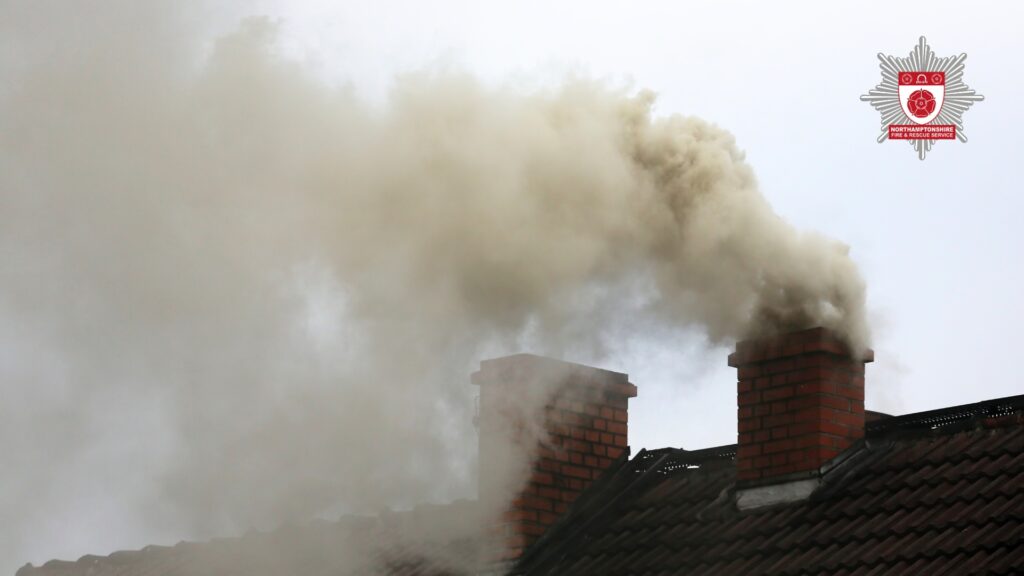
With Christmas just around the corner and temperatures falling, Northamptonshire Fire and Rescue Service is urging residents to take extra care when using chimneys and wood-burning stoves, such as log burners.
Over the past week, crews have attended two chimney fires due to build-up of debris in the chimney, a reminder of the risks posed by poorly maintained flues and the intense heat generated by these appliances. In the last 12 months, 35 chimney fires have been recorded, with the highest numbers occurring during the winter months of November and December.
Prevention Team Leader, Tina Collett, said:
“As families prepare for cosy nights in by the fire, it’s vital to remember that chimneys and log burners need regular maintenance. The heat from these appliances can reach extreme levels, and if soot or debris build up, it can ignite and cause a serious fire.
“Always use a professional chimney sweep as they’ll inspect your chimney thoroughly and provide a certificate for peace of mind. Attempting to clean it yourself can leave hidden hazards behind.”
Chimney and log burner fires can spread rapidly, causing devastating damage to homes and putting lives at risk. Warning signs of a chimney fire include a loud roaring noise from the chimney, sparks or flames visible from the chimney pot, and smoke or burning smells in adjoining rooms or loft spaces.
Recommended sweeping frequency:
- Wood-burning stoves/log burners: four times a year
- Coal: twice a year
- Smokeless fuels, oils, or gas: at least once a year
Top tips to stay safe:
- Use only dry, seasoned wood – never burn treated wood or accelerants.
- Store extra wood outside, away from the house.
- Keep your chimney and flue clean and well maintained.
- Ensure fires are fully extinguished before leaving the house or going to bed.
- Never block air vents or air bricks – airflow is essential.
- Keep flammable items well away from the stove and use a non-combustible hearth to protect the floor.
- Fit a carbon monoxide alarm near any fuel-burning appliance.
- Always allow ashes to cool completely before disposal. Store them in a metal container with a tight-fitting lid, placed on a non-combustible surface, away from your home and other structures
If a chimney fire breaks out:
- Your first option should be to get out, stay out, and call 999 immediately.
- If safe to do so, close air vents and flue dampers to reduce oxygen supply.
- Move flammable materials away from the fireplace.
For more winter safety advice, follow Northamptonshire Fire and Rescue Service’s social media channels or visit: www.northantsfire.gov.uk