
Northamptonshire
Fire and Rescue
Service

About this strategy
Our Sustainability Strategy sets out the vision for the PFCC for Northampton, Northamptonshire Police and Northamptonshire Fire and Rescue Service ‘to embed sustainability in everything we do’ and outlines our strategic commitments to ensure we can meet the needs of our communities in Northamptonshire – both now and in the future. In line with the United Nations Sustainable Development Goals and the Emergency Services Sustainability Charter, our strategy equally considers three impact areas of environmental, social and economic sustainability.
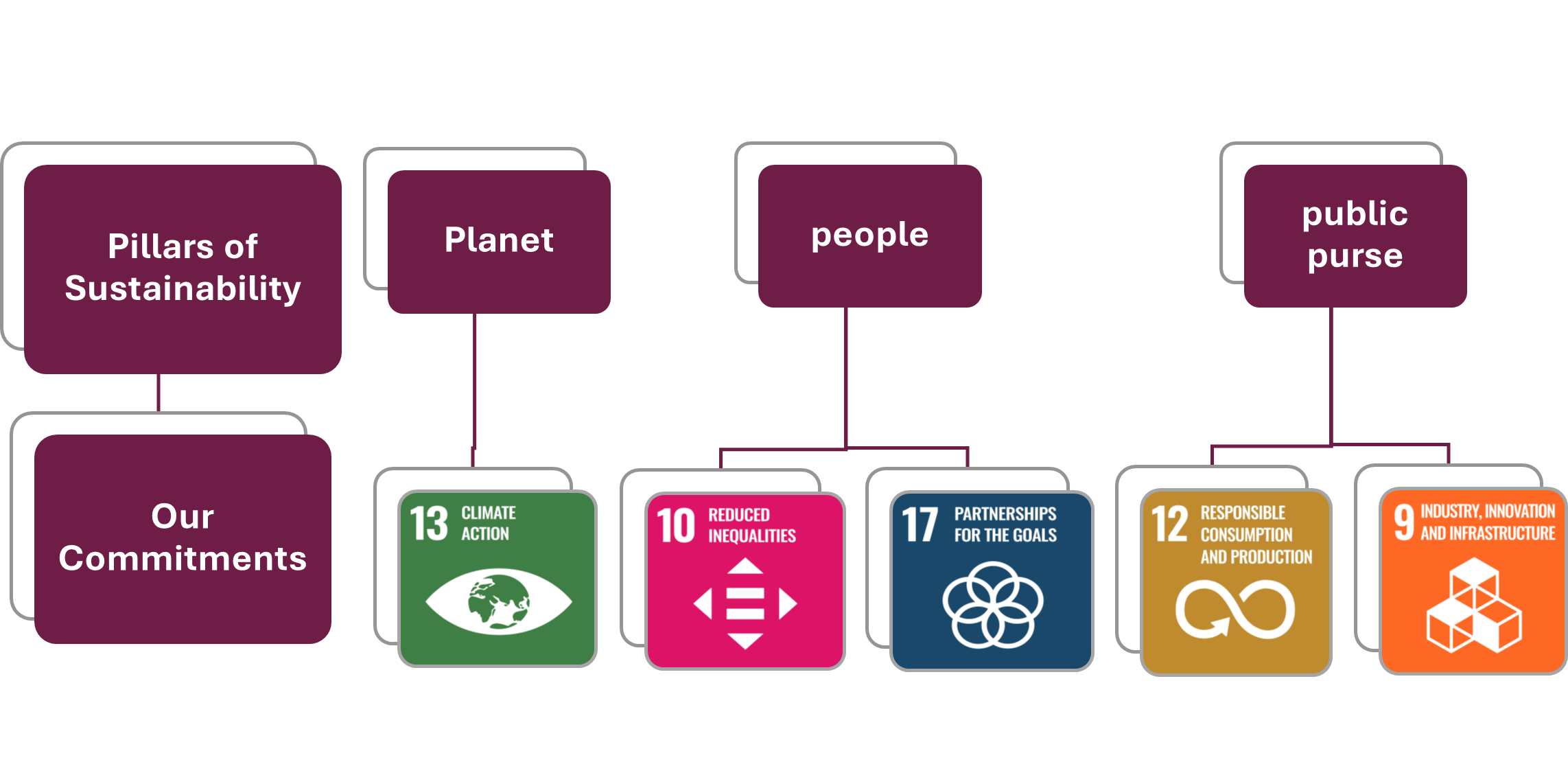
These are defined as the 3 Pillars of Sustainability:
Environmental sustainability (Planet)– keeping our communities safe and healthy by protecting the natural environment we share, improving our environmental impact, decarbonising our operations and adapting to climate change;
Social sustainability (People) – protecting, supporting and developing our colleagues and communities;
Economic sustainability and governance (Public Purse) – managing our resources effectively to create long-term value for the public.

Across Northamptonshire Police and Northamptonshire Fire and Rescue, there are many visions and strategies that we need to align with. Each of these visions and strategies includes elements towards sustainability, focusing on providing reliable services to the community.
Northamptonshire Police vision:
To provide an outstanding policing service, putting the public first in all that we do, and in doing so will support stronger, safer and sustainable communities.
Northamptonshire Fire and Rescue Services:
Providing exceptional fire and rescue services for all.
Enabling Services:
To transform and provide excellent enabling services to both emergency services in the most efficient and effective manner, supporting the frontline to do their jobs and delivering excellent services to the public
Joint Estates strategy:
The vision for the joint estate is to provide modern, fit for purpose, value for money accommodation for emergency services in the 21st century, providing an improved working environment for our colleagues.
In addition, the Digital Strategy for both organisations also include how they can be further efficient and fit for the future.
This Sustainability Strategy seeks to take account of the interdependencies between the visions and strategies that have already been produced. This strategy will set out the aims of building a sustainable future.
The government is committed to a Net Zero target for carbon emissions by 2050, and as a public body we have both a moral and legal responsibility to contribute.
This strategy sets out a clear, ambitious, direction of travel for how we will make our contribution.
Our organisation aims to utilise to the Emergency Services Environment and Sustainability Groups (ESESG) Sustainability Charter which is a framework that helps Police, Fire and Ambulance services to align with the United Nations Sustainable Development Goals and achieve sustainability objectives, both nationally and internationally.
This document is our pledge to embed sustainability in all that we do and recognise how we can commit to the three pillars of sustainability using the United Nations Sustainable Development Goals.
United Nations agreed to these 17 Sustainable Development Goals in 2015. They are at the heart of the 2030 agenda for Sustainable Development. We are using the United Nations Sustainable Development Goals (UN SDGs) framework to ensure our sustainability plans take a whole-systems approach and are aligned with the global priorities for peace and prosperity encompassed in the 17 goals.

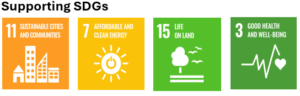
We have chosen to prioritise 5 of the 17 Sustainable Development Goals to work against as our targets. Our 5 SDGs were chosen based on our available resources, and relevant local areas of concern. Our chosen SDGS are areas that we can have the most impact on as an organisation.
All 17 of the Sustainable Development Goals are interconnected to some extent, meaning prioritising the goals that are attainable and relevant to us, gives us the best opportunity to make an impact.
As time progresses and climate circumstances change, there will be the ability to shift our priorities to what our county needs from us.
The United Nations Sustainable Development Goals can all be aligned with each of the three pillars of sustainability.


Why is SDG 13 important to us?
Greenhouse gas emissions are driving climate change, failure to respond to this fact is putting the future generations at risk. Climate change has an impact locally, this can be seen in the frequency of floods in the winter and droughts in the summer, putting a lot of pressure on our Police and Fire services. It is important to act on climate change, through decarbonisation, to minimise the risks on the future of our organisation. It is proven that the environment a person is in influences their health and wellbeing, by fighting climate change, and making a difference the organisation will be able to foster a healthy work atmosphere.
What does it mean?
Our organisation undertakes a wide range of activities that all contribute to a climate change. It is vital that we take immediate action to decarbonise our organisation, and our approach will ensure we prioritise purchasing clean energy sources, in turn reducing our emissions. We will start by targeting our direct and indirect emissions from our estate and our fleet of vehicles. Our stakeholders also have a significant carbon impact, and we will develop a greater understanding of our true carbon footprint and implement measures to reduce emissions within this area.
Why is SDG 10 important to us?
Addressing inequality is crucial for sustainable development and it impacts social cohesion, economic growth and overall well-being. High levels of inequality can lead to social unrest limit opportunities for marginalized groups and undermine trust in institutions. Inequality limits social mobility, restricting opportunities within the community and our organisation, this leads to high stress and low self-esteem.
What does it mean?
Inequality threatens long-term social and economic development, harms poverty reduction and destroys people’s sense of fulfilment and self-worth. SDG 10 directly relates to the organisations visions of putting the public first, being outward facing and modern. Working towards it demonstrates our commitment to build and develop our workforce and community. By reducing inequality, we reduce the risks to our organisational reputation within the local community, opening more opportunities up for us and improving our relationship with the general population of Northamptonshire.

Why is SDG 17 important to us?
Partnerships are key to the running of the organisation. They enable both Fire and Police to deliver a service. SDG 17 emphasizes the importance of collaboration and cooperation to achieve sustainable development. Effective partnerships between us and our stakeholders are essential for resource allocation, knowledge sharing and developing joint strategies to address challenges like climate change, safety and community well-being.
What does it mean?
We recognise the influential role that we have within our communities, with our partners and the businesses we engage with meaning we must work together to make long-lasting change that will deliver positive climate outcomes. This means introducing to our frameworks, a standard of climate commitments, to hold partners accountable.


Why is SDG 12 important to us?
The crisis of unsustainable consumption and production patterns worldwide is fuelling the ongoing crisis of climate change, nature loss and pollution. While countries are fulfilling their environmental agreement obligations and embracing comprehensive approaches to address environmental degradation, public funding supporting the production and consumption of fossil fuels has more than tripled since 2015, impeding the transition to net-zero emissions. Each stage of production or manufacturing presents an opportunity to reduce resource and fossil fuel use, foster innovation, conserve energy, cut targeted scope emissions, and advocate for a circular economy approach.
What does it mean?
As an organisation that relies on a wide range of products and services we must transition to more responsible means of consumption. Delivering sustainable procurement will be pivotal in our transition to becoming an organisation that uses resources responsibly whilst also upholding our social responsibility obligations. Resource allocation is key and will reduce strain on our organisations and in turn reduce climate change by reducing the number of resources needed.
Why is SDG 9 important to us?
Innovation and the use of technology are crucial for driving efficiencies in organisations because they enable more effective resource allocation, improve communication and data analysis, and enhance public safety. These advancements can free up officers and firefighters to focus on core duties, improve response times, and ultimately enhance public confidence in emergency services.
What does it mean?
The need for more collaboration, data consolidation and a people-centric approach to managing the organisations workforce is required. As new challenges arise, it has never been more important to facilitate communication and innovation in the organisation sector so that people, processes and technologies can align. The transformation in this sector should always be guided by the principles necessary to serve and protect citizens while keeping front line responders safe and productive within their roles.
Governance
Delivery of the commitments within this strategy will require the sustainability strategy to be fully embedded within our day-to-day activity. It is important to ensure the strategy is relevant and up to date, through reviews and good governance.
Annual Delivery Plan
Develop a delivery plan that is reviewed yearly. The delivery plan includes specific targets against benchmarks that can be used to establish our key performance indicators.
Sustainability Group
Encourage involvement from other departments across the organisation, this group can be used to share information and track progress. This group will also hold regular reviews of the strategy to keep it up to date.
Energy and Environmental Management
Investing in environment management systems for our energy use and environmental performance will make it easier for us to track performance of all organisational utilities and act on issues quickly. The verification of key data from multiple locations and varied formats ensures we align with environmental management standards.
Reporting
We recognise the importance of regular, transparent reporting of our sustainability performance, and we intend to track progress using dedicated audits and the analysis of accurate and consistent data.
Reporting on scope emissions
The three scopes are a way of categorizing the different types of greenhouse gas emissions created by our organization, suppliers, and stakeholders. Developing a full inventory by incorporating scope 1, 2 and 3 emissions, provides us with a benchmark. The scope emissions benchmark allows us to report on performance yearly.
Key Performance Indicators (KPIs)
Progress is tracked and monitored using Key Performance Indicators (KPIs). Our KPIs will come from dynamic sustainability targets that are produced by the Delivery Plan year on year. A dynamic sustainability target allows us to refine and adjust our targets based on performance, policy changes and new research.
Sustainability Performance Report
Provides transparent and accountable communication of our organisations environmental, social, and governance (ESG) impacts including a written analysis of our procurement process, framework updates and consumption reports. As well as updates on new innovations that have been researched by us and fleet upgrades.
Energy Management System
Investing in energy management software helps us monitor, control and optimise our energy consumption. Collecting data from various sources will provide detailed insights into energy usage. The collected data is analysed to create detailed reports on energy usage patterns identifying areas of high consumption and potential inefficiencies, resulting in cost savings.
| Carbon Dioxide Equivalent (CO2e) | Used to express the impact of each different greenhouse gas in terms of the amount of CO2 that would create the same amount of warming and is the standard unit for measuring carbon footprints | Scope 1 Emissions | Direct greenhouse gas emissions arising from operations that are owned or controlled by the reporting organisation |
| Circular Economy | An alternative to a traditional linear economy (take, make, waste) that seeks to reduce waste, recover resources at the end of product life and channel them back into production | Scope 2 Emissions | Indirect greenhouse gas emissions arising from the generation of purchased or acquired electricity, heating, or cooling consumed by the reporting organisation |
| Climate Change | The long-term alteration of temperature and typical weather patterns in a place | Scope 3 Emissions | Indirect greenhouse gas emissions (not included in scope 2) that occur within the value chain of the reporting organisation, including both input and output emissions |
| Environmental Management System | A strategic framework that helps an organisation comply with environmental regulations, manage environmental impacts and improve overall business performance | Sustainability | Meeting the needs of the present without compromising the ability of future generations to meet their own needs |
| Fossil Fuel | Fuels that are made from decomposing plans and animals which are found in the Earth’s crust and contain carbon and hydrogen | Sustainable Procurement | The act of adopting social, economic, and environmental factors alongside the typical price and quality considerations into the organisations handling of procurement processes and procedures. |
| Greenhouse Gases | Gases that Contribute to global temperature increase by trapping heat in the atmosphere | Value Chain | A full range of activities needed to create a product or deliver a service. |
| Overconsumption | A situation where the use of natural resource has exceeded the sustainable capacity of a system |
- Determine benchmark emissions for scope 1, 2 and 3
- Develop delivery plan based off commitments and agree targets
- Invest in energy management systems to transparently and accurately report on data
- Review strategy annually
- Work with procurement to ensure sustainability considerations are embedded in contracts
- Review our waste management processes
- Work with other organisations, sharing and adopting best practice on improving sustainability