Northamptonshire
Fire and Rescue
Service

About this strategy
The wellbeing of our workforce is fundamental to NRFS ability to deliver an outstanding service to the public. It is vital that our Firefighters and staff are equipped to manage the demands of the service and maintain their wellbeing throughout their career and beyond.
This strategy reflects the priorities of the National Fire Chief Council’s (NFCC) Health and Wellbeing Framework and focuses on local needs and priorities set out in our People and Culture Strategy. It sets out our commitment to creating a psychologically safe, inclusive, and supportive environment, and invites every member of our workforce to take personal responsibility for their own wellbeing and that of their colleagues.
There are a number of benefits of having a Wellbeing strategy, including to:
- Attract new people into the organisation
- Engage motivate and retain
- Create a more inclusive culture
- Lower sickness absence
- Improve performance, development and productivity.
Since the launch of the NFCC Wellbeing Framework in 2024 and the local Wellbeing Plan NFRS has committed further investment since the Autumn/Winter of 2025 in occupational health and wellbeing support through Enabling Services.
A new Employee Assistance Programme (EAP) provider has been onboarded to strengthen the wellbeing support offering and there is ongoing peer to peer support provided through the NFRS Wellbeing Support Team.
Specialist psychological support has been in place through a service contract which has been in place for many years. Improvements in the psychological services have been identified and will be a focus of the wellbeing strategy and plan to make those improvements focussing on interventions that are proactive and preventative.
For all employees to feel supported and receive high quality occupational health and wellbeing support. To embed trauma-informed practice, promote resilience, and deliver proactive and evidence-based support across the organisation. This will be achieved through collaboration, leadership, and continuous improvement, and to build a culture where wellbeing is incorporated into our everyday at work.
NFRS has developed this strategy through feedback gathered from national and local insight and local workforce data, to ensure it addresses the evolving challenges of the fire and rescue service. It sets out a clear vision to create a workforce that is fit to serve, is resilient, is well supported, and empowered to thrive.
Wellbeing is overseen by the People and Culture Board and is identified as a priority delivery theme within the 2025 – 2030 People and Culture Strategy:
‘Review and develop our wellbeing model and products, consider broader wellbeing provisions in relation to financial and emotional matters’.
We aim to:
- Promote and coordinate activity to improve the overall welfare and health and wellbeing of our employees through preventative wellbeing activity and occupational health services.
- Ensure proactive support is in place for the roles impacted by trauma and continue to review and assess the need within the organisation.
- Ensure that we understand and take a holistic approach to the physical and mental wellbeing needs of employees and put in place preventative and proactive measures to address these.
- Upskill managers and leaders to identify early warning signs of poor wellbeing and equip them with the tools and knowledge to support their staff.
- Establish programmes and activity to support Suicide Prevention.
- Developing supportive policies, programmes that support families, and that family members are aware of what support is available.
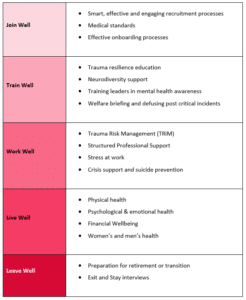
We will utilise the NFCC Wellbeing Framework Principles, and take a holistic career approach from Joining to Retiring under the following delivery areas:
Join Well – Recruitment and induction with wellbeing at the core
Train Well – Building resilience awareness
Work Well – Ongoing support throughout service
Live Well – Supporting wellbeing outside of work
Leave Well – Preparing for retirement or transition
Each delivery area will:
- Be evidence based
- Have a plan that will prioritise workstreams that will have clear deliverables and measures for success / outcomes
- Ensure effective engagement and communication
- Be inclusive and support reduction in any organisational cultural stigma
We will enable delivery of the strategy through Governance, Data Management, Engagement and Resources:
- Governance
The Wellbeing strategy and plan will be driven through the Wellbeing Group . The Group will ensure that the areas of work identified meet organisational needs, and related data and evaluation will feed into this group, with successes and/or issues or concerns escalated to the People and Culture Board.
The Wellbeing Group provides the governance over the delivery of the wellbeing strategy and plan whose purpose/aims are to:
- Oversee and ensure delivery on all matters related to Wellbeing and Welfare for the service.
- Be the delivery function on behalf of the People and Culture Board (into which this group reports) on all matters Wellbeing related.
- Oversee the arrangements for Occupational Health for the organisation, managing performance and adjusting delivery as required.
- Ensue an equal focus on preventative activities as well as retrospective activities.
- Escalate matters to People and Culture Board that require corporate decision making or unblocking.
- Resolve competing priorities as may exist from time to time.
- Support and challenge initiatives and seek innovative and efficient solutions.
This governance structure supports transparency, accountability, and continuous improvement, helping us to embed wellbeing across the organisation.
- Data Management
Utilise data to identify trends and undertake evaluations to inform development and delivery of Wellbeing interventions, measure the impact of these interventions on organisational performance and individual health, wellbeing, and resilience.
Examples of data we will gather and review:
- Organisational level and national surveys
- Presenteeism and Leave-ism
- Turnover & Attrition
- Leaver and stay interview feedback
- Sickness Absence and impact of interventions on aiding return to work
- Recuperative / modified duties
- Occupational health referrals for physical and psychological support
- Service user feedback after accessing internal support services
- Ill health retirement
- Complaints, Grievances and Disciplinaries
- EAP, and other psychological support interventions
- Engagement
We will engage with the workforce to ensure that needs are identified, and work collaboratively with firefighters, staff, line managers, officers and internal departments to promote, support and deliver wellbeing effective and appropriate solutions.
- Resources
We will use the NFCC policies and guidance to support delivery of our strategy, and benchmark best practice with a focus on:
- Suicide prevention
- Trauma and Stress
- Peer support
What is our wellbeing offer?
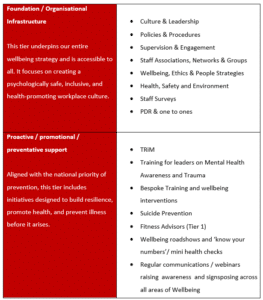
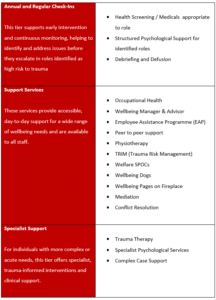
Our wellbeing model is categorised from foundation to specialist support, ensuring that all members of NFRS have access to foundational support, while recognising that individuals may require different levels of intervention depending on their circumstances.
A Joint Commitment
We all joined the Fire Service with a shared purpose to serve the public to the best of our ability. To do this well, we must be healthy, motivated, resilient, and supported. It is a team effort and so is wellbeing. Everyone has a role to play in creating a culture where we look after ourselves and each other.
The strategy outlines what NFRS will do to support you and what we ask of you in return is:
- Ensure you look after your own wellbeing – applying self-care strategies that you know keep you well.
- Share your wellbeing concerns with your supervisor to help them support you.
- Reach out for support if you’re struggling, help is available and accessible.
- Engage with the services and support available to you.
- Support a wellbeing culture within your team.