Northamptonshire
Fire and Rescue
Service

This Communications Strategy will outline how we can improve our reach to the public and local stakeholders, so that they are well informed, keep themselves safe and have confidence in the Fire Service. It also outlines how we will ensure staff feel valued, build and maintain trust and promote our success.
Communicating effectively with our residents and our staff is a major contributor to keeping people safe, ensuring people who work for us are engaged, and that we move towards achieving our vision of providing exceptional fire and rescue services for all.
During our recent Community Risk Management Plan (CRMP) 2025-2030 consultation, the public said they were satisfied with the performance of Northamptonshire Fire and Rescue Service and viewed it in a positive light – but that this perception was based only on a narrow understanding of its work.
And in our internal People Survey, filled in by more than half of our workforce, our staff told us they wanted to be regularly updated and for the organisation to communicate better about change.
This Communications Strategy will outline how we can improve our reach to the public and local stakeholders, so that they are well informed, keep themselves safe and have confidence in the Fire Service. It also outlines how we will ensure staff feel valued, build and maintain trust and promote our success.
It is clear there is a greater desire for the Service to be visible within the community, and for residents to understand more about its role, the breadth of its work, how it responds to incidents, and for prevention and protection advice on emerging risks in local areas.
All our activity will have a business purpose – meeting the strategic needs of the Fire Service, showcasing us a visible and effective community leader, and fulfilling our responsibility to warn and inform. Our focuses will include:
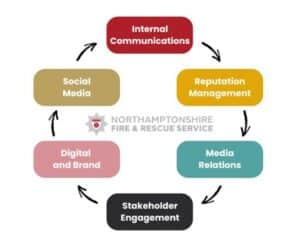
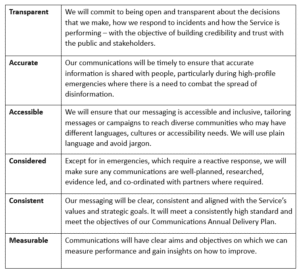
- Enhance public awareness and engagement with members of the public across the county. We will support the duty to keep communities safe and well by promoting safety messages and highlight how staff are preventing and protecting people from harm. By doing this, not only do we build trust and confidence with our communities and stakeholders, but we can help to save lives and make Northamptonshire a safer place to live, work and visit.
- Through our internal communications, we will ensure our staff are motivated, informed and engaged. Good service starts from inside, so we will give staff information on what is expected of them to help the Service deliver its strategic programme of work, and how they can meet the highest standards of behaviour to foster an inclusive workplace culture. We will also highlight areas of progress in performance, show we are acting on staff feedback, and celebrate good practice to give our workforce a sense of belonging.
- We will warn and inform the public, helping to support operational effectiveness by ensuring that accurate information flows quickly during incidents, providing reassurance and co-ordinating with media, partner agencies and the public.
- We will amplify community engagement, encouraging dialogue and participation by ensuring that messaging has a meaning and value for local communities, and remaining responsive to local needs. We will engage with diverse community groups to make Northamptonshire Fire and Rescue Service more inclusive and representative of the communities that it serves.
- Develop long-term trusted partnerships with local stakeholders, working with them to define the purpose of targeted activity and develop a shared responsibility for safety and resilience.
We will actively find ways to build new audiences on top of the existing ones we already communicate with. Each audience will have distinct needs and expectations. They include:
The public – We will communicate with residents of Northamptonshire on safety education, fire prevention, road safety, incident updates, community reassurance and emergency preparedness.
Staff – Northamptonshire Fire and Rescue Service staff, Enabling Services staff, volunteers and representative bodies will be informed of organisational updates.
External partners – We will liaise with Local Resilience Forum (LRF) Partners, such as Police, local authorities, ambulance and the NHS. We will also communicate with central Government, the Police Fire and Crime Panel, elected councillors, Parish Liaison Representatives (PLRs) and other community organisations such as businesses, Residents’ Associations and faith groups to showcase collaborative work. We will use targeted communications with schools and businesses to promote prevention and protection activity.
Media – Relations will be managed proactively to ensure accurate coverage and build positive relationships with hyper local publications, journalists at local and national newspapers, radio stations, TV channels and trade press outlets.
Specific demographics – We will improve communications to vulnerable groups, including older adults, younger people, people with disabilities, deprived communities and non English speakers. Communications will be adapted to ensure they accessible.
All messaging will have a business purpose and will be aligned with the Service’s strategic plans and operational priorities. This will support the delivery of our vision and mission statements, and be underpinned by the objectives set out in the:
- Community Risk Management Plan 2025-30
- CRMP Annual Delivery Plan
- Police, Fire and Crime Commissioner’s Safe and Sound public safety plan
- NFRS People and Culture Strategy
- NFRS Sustainability and Resilience Strategy
- NFRS Prevention Strategy
- NFRS Protection Strategy
- NFRS Response Strategy
- NFRS People Survey (internal communications)
- Core Code of Ethics
- Communications and Engagement Fire Standard
Our communications initiatives and key messages will also focus on the following areas:
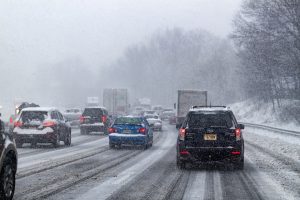
Safety advice – The importance of fire prevention, road and water safety, and emergency preparedness. We will also cover emerging risks such as wildfires, flooding and lithium-ion batteries.
Community engagement – Promote the presence of the Fire Service at community initiatives, schools and any other events where they have engaged with the public – and proactively highlight opportunities for the public to engage with Northamptonshire Fire. We will also provide toolkits for firefighters to improve their confidence so they can more effectively engage with members of the public at community events.
Emergency response – We will liaise with the media both proactively and reactively on incident messaging, as well as provide them with content on safety campaigns, service updates and community events.
Success stories – Sharing case studies that demonstrate where we have intervened effectively to protect life or reduce harm and celebrating the outstanding work of our employees and volunteers.
Preventative work – Highlight the importance of Home Fire Safety Visits and promote the work of home fire safety advisors and crews in protecting our most vulnerable residents. Showcase work of the Prevention team when they engage with young people, carers, older people and local businesses (such as through the Waterside Responder training).
Protection work – Promote the importance of fire safety for local businesses, signposting them towards our Protection Team and our business safety web pages. Highlight any legislative changes businesses need to be aware of, encourage good practice and deter bad practice by reporting on successful court prosecutions.
Service Updates – Consistent updates on our current performance and levels of service, equipment and estates, response capabilities, new initiatives, community safety projects and exercises.
Equality, diversity and inclusion (EDI) – We will support our journey to becoming a truly inclusive place to work by internally promoting our EDI objectives, positively reflecting diversity in our communications and championing our staff networks.
Staff awareness – Speak to our people about what is expected of them in the workplace, and understanding the roles, values and achievements of the Service.
Belonging and behaviour – Internal communications will also focus on workplace standards, embedding the Code of Ethics, and ensuring there is a positive workplace culture.
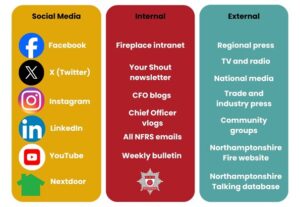
We consistently benchmark and horizon scan to see what channels are used by other Fire Services and will look to adopt channels that may become available.
As a Category One emergency services responder under the Civil Contingencies Act 2004, we have a duty to warn and inform residents.
Part of this requirement will be to have a Crisis Communications plan so that the Service can respond swiftly and effectively to emergencies, reputational risks and public scrutiny.
We already benchmark against national best practice and are key members of the Local Resilience Forum (LRF) communications group, where we play a leading role. We also regularly test our crisis communications in training exercises.
Several members of the team have had Crisis Communications training and follow the LRF Communications Plan for major and critical incidents.
Our approach is to utilise social media first, which is where many residents will be searching for updates. We also make best use of local media through our strong working relationship with local journalists to warn and inform. Our prompt handling and transparency in responding to the media has fostered a culture of trust and mutual respect.
A tailored response plan is being put in place that will formally outline roles and responsibilities, and will include media holding statements, a plan on social media monitoring and stakeholder briefings for LRF partners and other key organisations, including elected officials.
The team will also manage internal communications that keep staff informed and will signpost to wellbeing resources if necessary.
Once a crisis has been resolved, the team will hold a debrief to evaluate their performance, identify any lessons that may have been learned, and update the strategy with any new protocols.
Our communications will have clear objectives that relate to our strategic goals, so that our work is measurable.
This will allow us to establish our own framework for evaluation, meaning we can hold ourselves to account on whether the objectives have been met. Feeding into this framework will be:
- Digital and social media metrics
- Website analytics
- Survey responses
- Media coverage analysis
- Monthly performance report
- Staff feedback and pulse surveys
We will benchmark our work against other Fire and Rescue Service communications to ensure the work we deliver is of the highest standards and ensure that we remain compliant with the Communications and Engagement Fire Standard by the Fire Standards Board. We will also stay informed of any emerging trends or new ways of communicating that can help to refine our strategy.
Gathering feedback from the community and local stakeholders on the delivery of workstreams such as the CRMP, the Commissioner’s Safe and Sound Plan and budget consultations will be used to inform future messaging and strategies – as will any outcomes or recommendations from HMICFRS.
All communications will be evidence and data led where possible, and evaluating our activity is important to measure the impact of our work and gain insight so that we can consistently learn and drive improvements forward.